

The world of work is changing faster than ever. Advances in technology, artificial intelligence, automation, and digital communication are transforming how businesses operate and how people build their careers. The future of work is not simply about replacing traditional jobs—it is about creating new opportunities, developing new skills, and finding better ways to work.
TECHNOLOGY AT THE HEART OF CHANGE
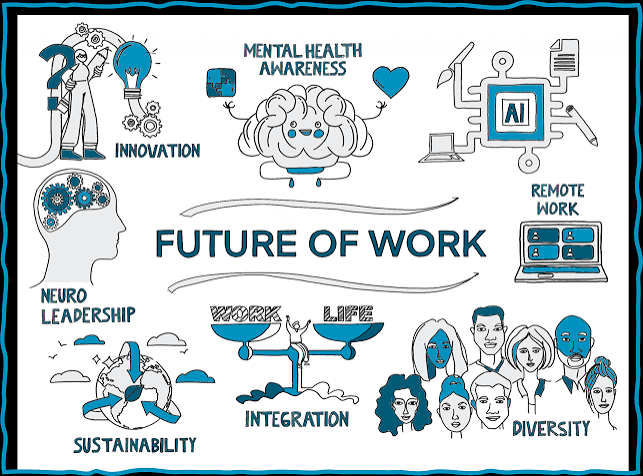
Technology has become an essential part of modern workplaces. Artificial intelligence, cloud computing, automation, and digital tools are helping businesses complete tasks more efficiently and make better use of their resources.
From online meetings and collaboration platforms to AI-powered tools, employees can now work together from different locations while staying connected and productive.
THE RISE OF REMOTE AND HYBRID WORK
Remote and hybrid work have become important parts of the modern workplace. Many organizations now allow employees to work from home, from the office, or a combination of both.
This flexible approach can help employees manage their time more effectively while allowing businesses to access talent from a wider range of locations.
SKILLS WILL MATTER MORE THAN EVER
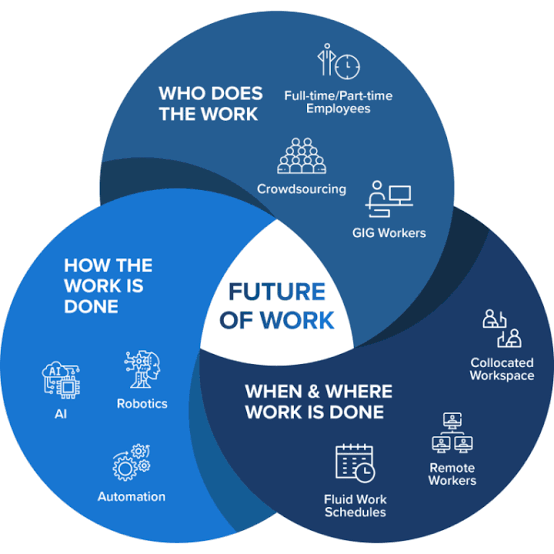
As technology continues to evolve, workers will need to continuously update their skills. Digital literacy, communication, problem-solving, creativity, teamwork, and adaptability are becoming increasingly valuable.
Learning is no longer limited to schools and universities. Online courses, professional training, workshops, and practical experience provide people with opportunities to develop new skills throughout their careers.
ARTIFICIAL INTELLIGENCE AND AUTOMATION
AI and automation are changing the way many tasks are performed. Repetitive and time-consuming activities can increasingly be handled by technology, allowing people to focus more on creativity, decision-making, communication, and complex problem-solving.
Rather than viewing technology only as a replacement for human work, the future workplace will increasingly involve people and technology working together.
A MORE FLEXIBLE WORKPLACE
The future of work is likely to provide greater flexibility in where, when, and how people work. Businesses are exploring flexible schedules, hybrid teams, digital collaboration, and outcome-focused approaches to productivity.
At the same time, maintaining communication, teamwork, employee well-being, and a strong workplace culture will remain important.
PREPARING FOR THE FUTURE
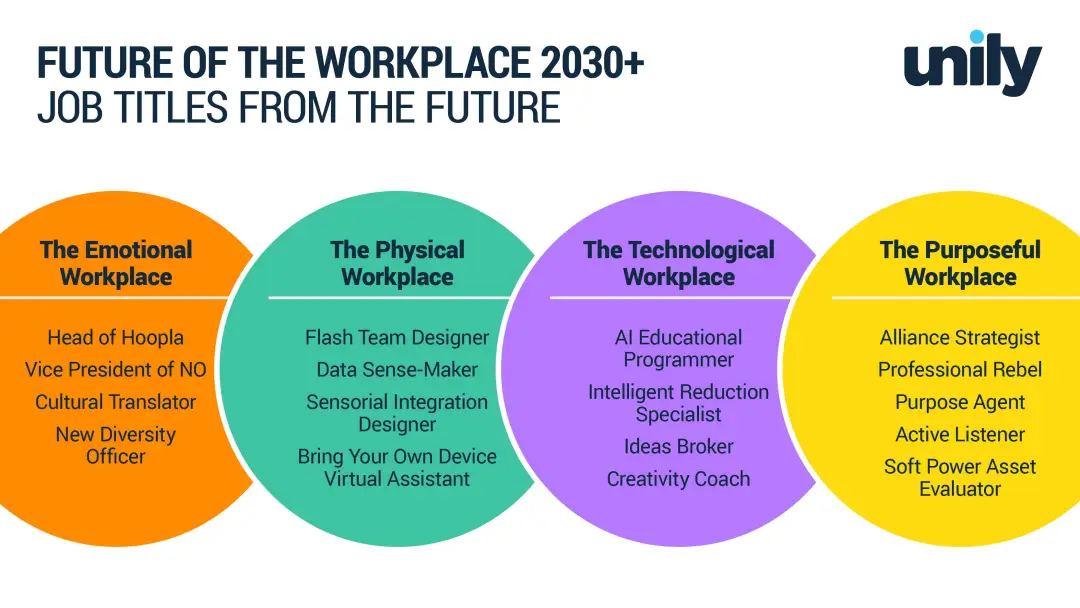
Preparing for the future of work requires a willingness to learn and adapt. Individuals can focus on building both technical and human skills, while businesses can invest in employee development and modern workplace technology.
The future belongs to those who are prepared to embrace change, keep learning, and use technology responsibly.
CONCLUSION
The future of work is being shaped by technology, changing workplace expectations, and continuous learning. While some jobs and tasks may change, new opportunities will also emerge.
By developing relevant skills, staying adaptable, and combining human creativity with technological innovation, individuals and organizations can prepare for a workplace that is more connected, flexible, and digital than ever before.